House Lifting
In Cape Cod, MA
Elevate and protect your home with confidence.
House lifting elevates your Cape Cod home above flood base elevation — reducing flood risk, dramatically lowering insurance premiums, and protecting your property value for decades.
What is house lifting
and why does it matter on Cape Cod?
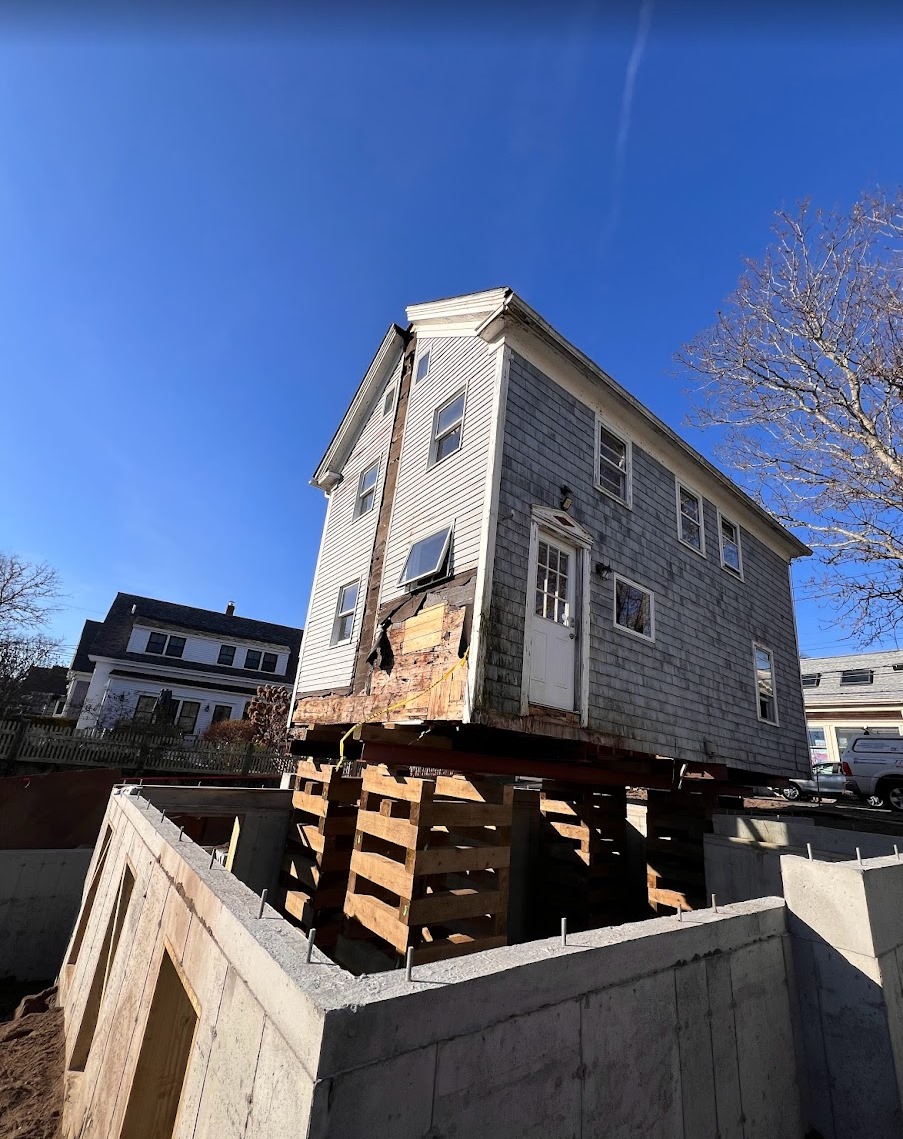
House lifting — also called structural elevation — is the process of raising an existing home off its foundation to a higher elevation. On Cape Cod, this is primarily done to comply with FEMA flood zone regulations and reduce flood insurance premiums, which can be thousands of dollars per year for properties below base flood elevation.
Cape Cod has one of the highest concentrations of FEMA flood zone properties in Massachusetts. Towns along Nantucket Sound, Cape Cod Bay, and the Atlantic — including Harwich, Chatham, Orleans, Eastham, Wellfleet, and Truro — have large numbers of properties in AE and VE flood zones where elevation requirements directly affect insurance costs and property value.
Ocazo Construction has been lifting homes on Cape Cod since 2011. We manage the entire process — structural assessment, engineering, permitting through your Cape Cod town, the lift itself, new foundation construction, and reconnection of all utilities. One contractor. One point of contact. Done right.
Four reasons Cape Cod
homeowners lift their homes.
You can check your property's flood zone status on FEMA's Flood Map Service Center at msc.fema.gov — enter your address and look for your flood zone designation (AE, VE, AO, or X). If you're in AE or VE and your first floor is below base flood elevation, you're likely paying significantly more than you need to for flood insurance. Call us — we'll assess your property for free.
How we lift your home,
step by step.
House lifting is a major structural project. Here's exactly how we approach it — with full transparency at every phase.
We assess your home's current foundation, framing, and flood zone requirements. We coordinate with a licensed structural engineer to determine the required elevation height, lifting method, and new foundation specification.
- Flood zone determination and BFE review
- Structural engineering coordination
- Elevation certificate review
- Foundation type assessment (slab, crawl, basement, piers)
We handle all permit applications through your Cape Cod town building department. House lifts require building permits, engineering sign-off, and in some towns, Conservation Commission review for properties near wetlands or water.
- Building permit application
- Engineering plans submission
- Conservation Commission review if required
- Flood zone compliance documentation
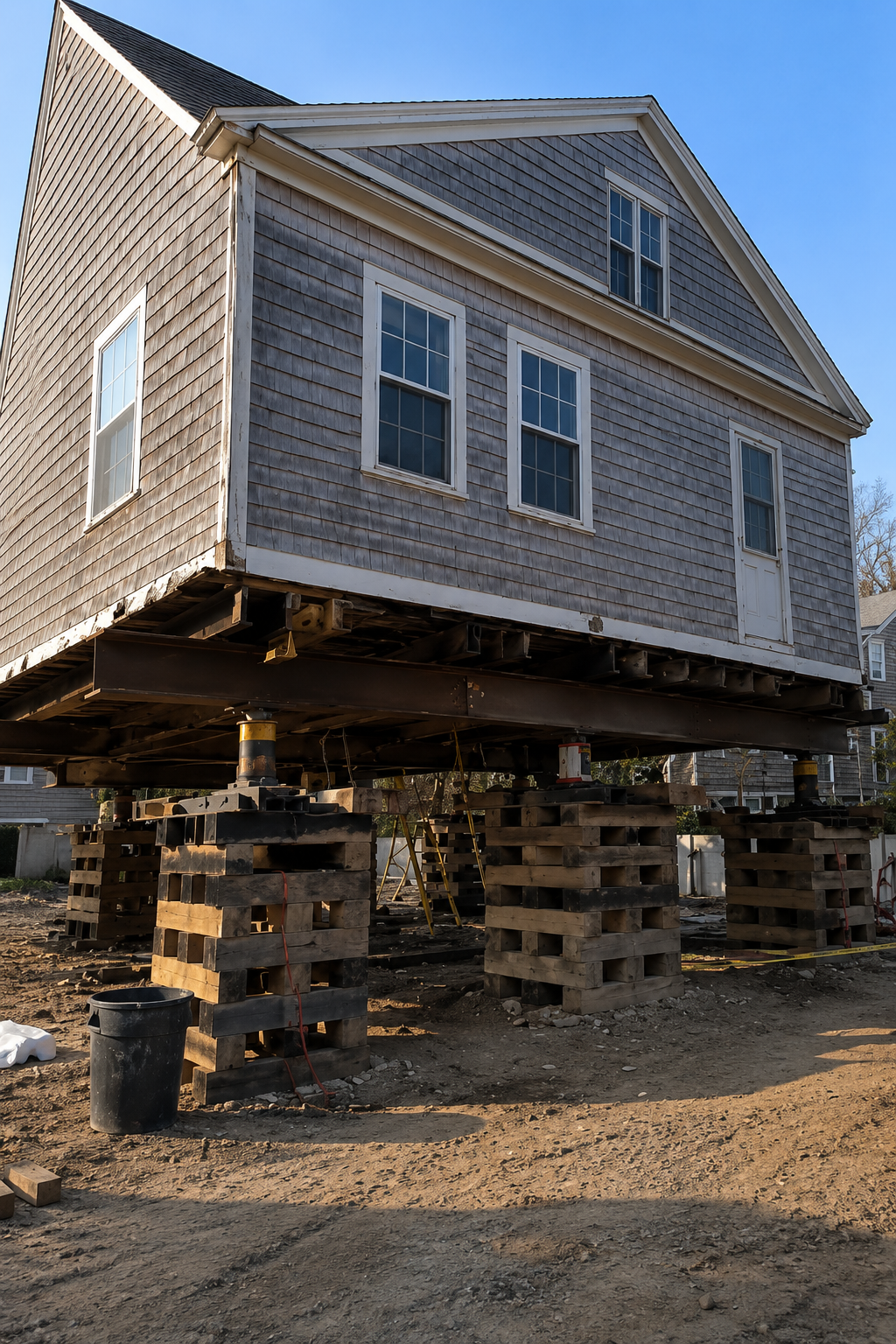
Before the lift, we carefully prepare the home — disconnecting utilities, removing exterior attachments (decks, porches, steps), and installing the lifting beams and cribbing system. Your belongings stay inside.
- Utility disconnection (gas, electric, water, sewer)
- Temporary support beam installation
- Deck and stair disconnection
- Cribbing and jacking system setup
The home is lifted slowly and carefully using hydraulic jacks — typically 2–4 inches at a time — until target elevation is reached. While held aloft, we construct the new foundation (concrete piers, stem wall, or full foundation) to the required height.
- Hydraulic jack system installation
- Controlled elevation to target BFE + freeboard
- New foundation construction at elevation
- Home set and secured on new foundation
Once the home is on its new foundation, we reconnect all utilities, rebuild exterior stairs and decks to the new elevation, complete all interior reconnection work, and obtain final inspections and sign-off.
- All utility reconnections
- New stairs, decks, and entries rebuilt
- Elevation certificate issued post-lift
- Final inspection and town sign-off
After the lift, we help you understand the documentation needed to update your flood insurance policy. A new elevation certificate from a licensed surveyor documents the new elevation — and triggers your premium reduction.
- New elevation certificate coordination
- FEMA compliance documentation
- Guidance on submitting to your insurer
- All permits closed and filed
Understanding flood zones
and what lifting changes.
FEMA's National Flood Insurance Program (NFIP) prices flood insurance based on a property's "actuarial risk" — how likely flooding is, and how severe the damage would be. The single biggest factor is how far your first finished floor sits above Base Flood Elevation (BFE).
Lifting your home above BFE — ideally with additional freeboard (1–2 feet above the minimum) — directly reduces your actuarial risk rating and can cut your annual premium significantly.
Properties lifted 2+ feet above BFE typically see 50–80% reductions in annual NFIP premiums. For homes paying $5,000–$10,000/year, this is $2,500–$8,000 in annual savings.
Elevation is the most effective physical protection against flood damage. A home above BFE may still get water in a severe storm — but the structural and contents damage is dramatically reduced.
A lifted, FEMA-compliant home with documented lower insurance costs is more valuable and more marketable on Cape Cod. Buyers price in flood insurance when evaluating offers.
If your home was substantially damaged by a flood, you may qualify for FEMA's Increased Cost of Compliance (ICC) coverage — up to $30,000 toward the cost of bringing your home into compliance.
We'll do a free assessment of your property — reviewing your flood zone, current elevation certificate (if available), and estimated insurance savings — so you can make an informed decision before committing to anything.
Schedule free assessmentFrequently asked about
house lifting on Cape Cod.
Most wood-framed homes can be lifted. The key factors are the home's structural condition, foundation type (slab homes are more complex to lift than crawl space or basement homes), and the site conditions. We assess all of this during your free consultation before any commitment. Severely deteriorated homes may require partial reconstruction rather than a straight lift.
A typical Cape Cod house lifting project ranges from $80,000 to $200,000+. Cost depends on the home's size and weight, required elevation height, foundation type being built, complexity of utility disconnection/reconnection, and whether decks or porches need to be rebuilt. Your free assessment will include a detailed estimate.
For most of the project, yes — but not during the active lift phase itself. When the home is on cribbing with disconnected utilities, you'll need alternative accommodations for typically 2–8 weeks. We plan the project to minimize this period and give you a clear timeline well in advance. Most homeowners stay with family or in a short-term rental.
It depends on how far below BFE your home currently sits and how high above BFE you lift it. A home lifted to exactly BFE will see some reduction. A home lifted 2 feet above BFE (called "freeboard") typically sees 50–70% premium reduction. A home lifted 3+ feet above BFE can see 75–85% reduction. Your insurance agent can provide exact quotes based on your new elevation certificate.
Yes — always. A house lift requires a building permit, structural engineering plans, and in many Cape Cod towns, additional Conservation Commission review if the property is near wetlands, ponds, or coastal areas. We manage the entire permitting process and know the requirements in every Cape Cod town.
All utilities — gas, electricity, water, and sewer — are disconnected before the lift and reconnected after the home is on its new foundation. We coordinate with all utility companies, obtain necessary permits for disconnection and reconnection, and manage this entire process. You'll have a clear timeline for when each utility will be off and back on.
Is your Cape Cod home
in a flood zone?
The first step is a free property assessment — we'll review your flood zone status, current elevation, and estimated insurance savings so you can make an informed decision. No cost. No obligation.
Tell us about your property — we respond within 1 business day.